
Mice and Rats Hub Page
Mice and rats are inside your home right now — contaminating your air, chewing your wiring, and multiplying every day.
By the time you see one mouse, there are dozens more behind your walls. We find every entry point, seal your home permanently, and eliminate the entire population — no rodent comes back.
Request your free consultation
Free phone consultations and estimates — we typically respond within 30 minutes during business hours
Every request is personally reviewed
by a real member of our Olathe office team
🔒 Your information is secure. No spam, no obligation, no automated calls.
✓ Complete elimination + permanent exclusion — we trap, seal every entry point, and monitor so they never return.
How we eliminate rodents — completely and permanently
We don’t just set traps and hope. Our 5-step process ensures total elimination and permanent exclusion. The seal-up is what makes results last — and it’s the step most companies skip.
Comprehensive inspection — inside and out
We inspect your entire home — attic, walls, basement, crawl space, garage, and the full exterior perimeter. We identify every sign of activity: droppings, gnaw marks, grease trails, nesting material, urine staining. We find every entry point — gaps around pipes, foundation cracks, soffit gaps, garage door seals, utility penetrations. You receive a complete assessment of what we find and exactly what the elimination plan involves.
Targeted trapping & elimination
We deploy professional-grade traps in strategic locations based on activity patterns identified during inspection — not randomly placed like DIY attempts. Trap placement is based on species behavior, travel routes, and nesting locations. We monitor traps on a regular schedule and adjust placement based on results. The goal is complete population elimination — not just reducing numbers.
Permanent exclusion — every entry point sealed
This is the step that makes results permanent — and the step most companies skip entirely. We seal every gap, crack, and opening in your home’s exterior using professional-grade materials: steel wool, metal flashing, concrete patch, hardware cloth, and commercial-grade sealant. Mice can fit through a gap the size of a dime. Rats need only a half-inch. We close every one. Without this step, new rodents replace the old ones within weeks.
Exterior population control & monitoring
We install tamper-resistant exterior bait stations around your home’s perimeter to intercept rodents before they ever reach your foundation. These stations are inspected and maintained on a regular schedule. If new rodent activity appears in the area — from neighboring properties, construction disturbance, or seasonal migration — the stations catch it before it becomes your problem again.
Attic restoration when needed
When rodents have been present long enough to cause significant contamination — heavy droppings, urine-saturated insulation, nesting debris, foul odor — we offer complete attic restoration: full insulation removal, DSV™ hospital-grade sanitization, Bac-Azap® deodorization, and TAP® pest control insulation replacement. Not every job needs this — we assess honestly and only recommend it when contamination warrants it.
Why the seal-up matters most
Trapping removes the mice inside. But without sealing every entry point, new mice replace them within weeks — guaranteed. The scent trails left by the original population actually attract new rodents to the same entry points. Our exclusion work breaks this cycle permanently. It’s the single most important step in rodent control, and it’s what separates Midway from companies that just drop traps and leave.
Why rodents in your home are more dangerous than you think
Most homeowners think mice are just a nuisance. The reality is medically documented and far more serious — especially for families with children, elderly members, or anyone with respiratory conditions.
Airborne contamination through your HVAC
Rodent droppings and urine dry out and break into microscopic particles that become airborne — especially in attics where your HVAC air handler is located. Every time your system runs, it can pull contaminated air from the attic into your living space. Your family breathes this air every day the rodents remain. This isn’t theoretical — it’s the primary exposure pathway for hantavirus and other rodent-borne pathogens.
Hantavirus, salmonella, leptospirosis
Mice and rats carry diseases that are transmitted through droppings, urine, saliva, and nesting material. Hantavirus causes severe respiratory illness. Salmonella contaminates food preparation surfaces. Leptospirosis causes kidney and liver damage. Deer mice — common in KC-area homes near open fields — are the primary hantavirus carrier in the Midwest. These diseases are contracted without direct contact with the animal.
Fire hazard from chewed wiring
Rodents chew constantly — their teeth never stop growing. Electrical wiring behind walls, in attics, and under insulation is a primary target. Chewed wiring with exposed conductors is a documented fire hazard. The damage is invisible — hidden behind drywall and insulation where you can’t see it. Rodent-caused electrical fires are one of the most preventable yet most devastating consequences of untreated infestations.
Insulation destruction raises energy bills
Rodents tunnel through insulation, compress it with nesting, and contaminate it with urine and feces. Damaged insulation loses its thermal value — your heating and cooling system works harder, and your energy bills increase. In severe infestations, insulation damage is extensive enough to require complete removal and replacement. The cost of insulation replacement alone can exceed the cost of professional rodent elimination.
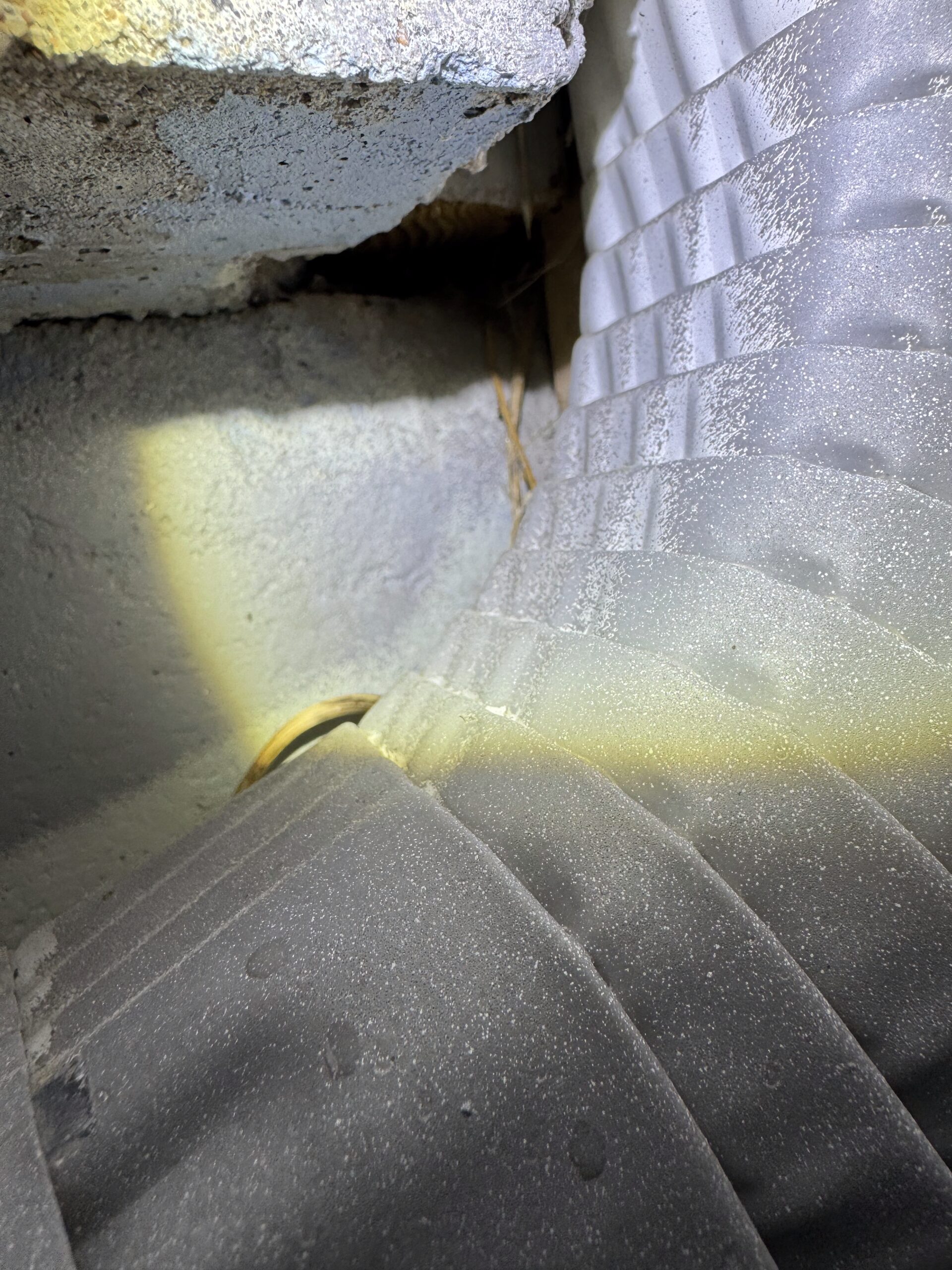
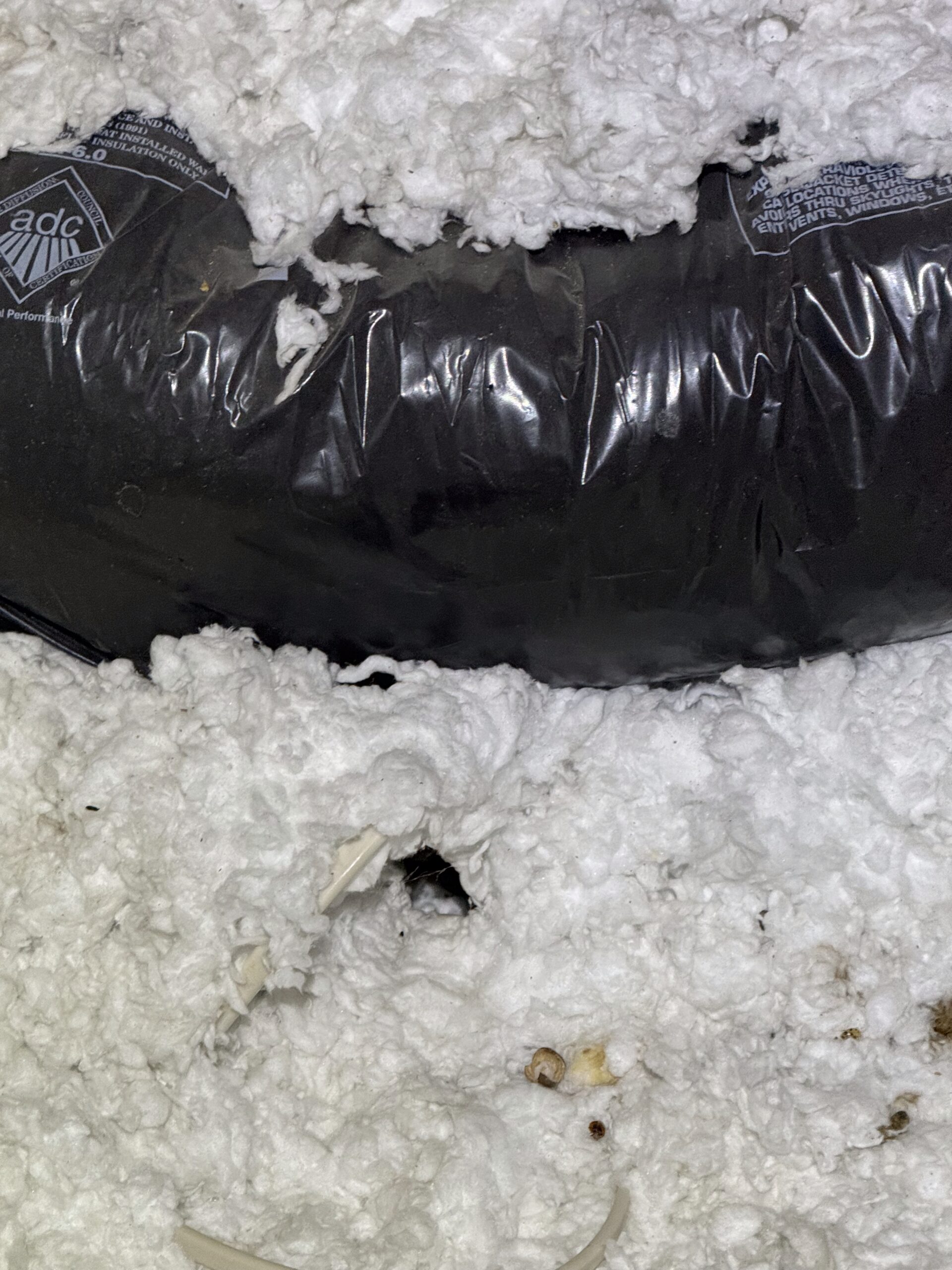
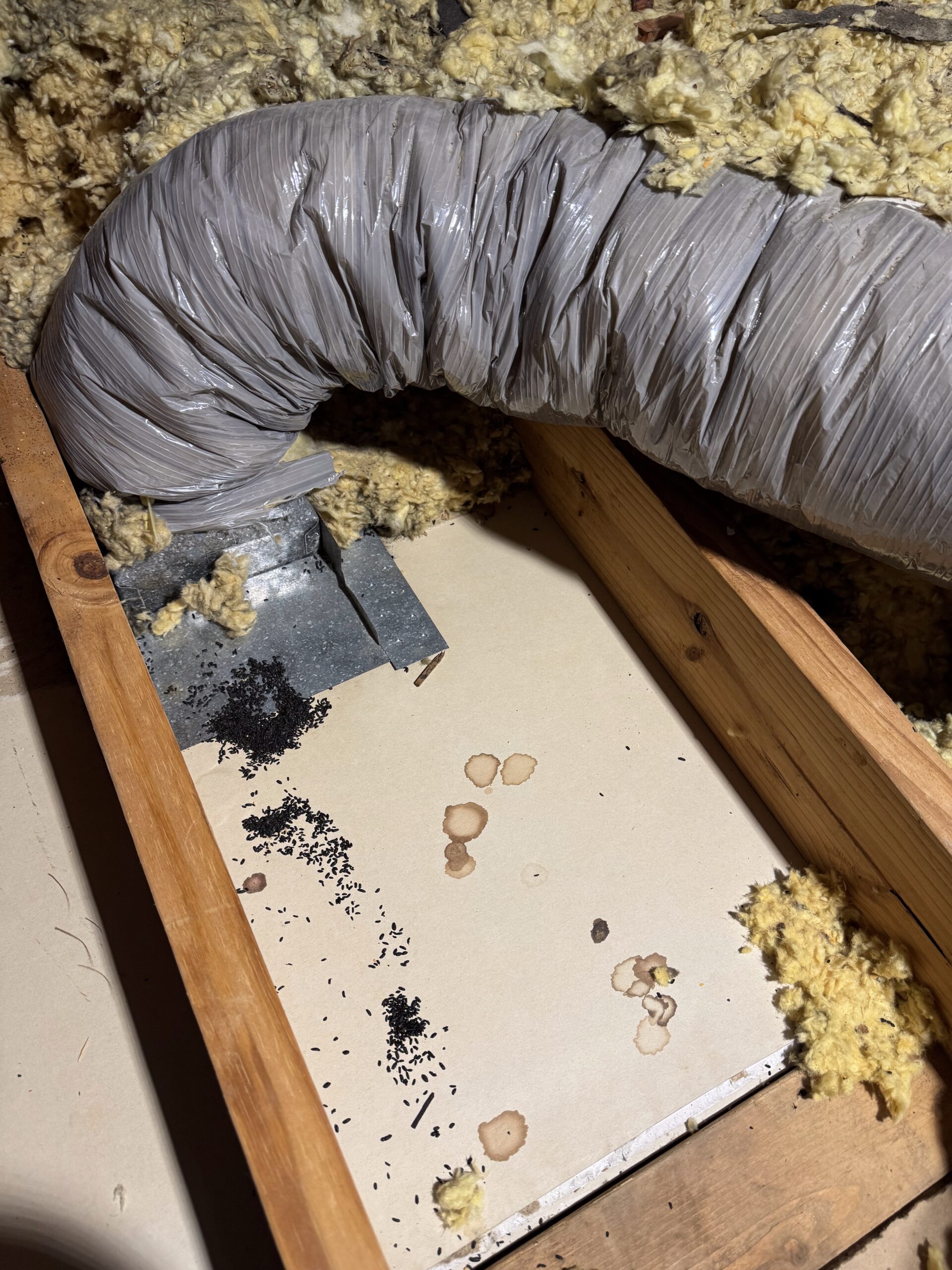
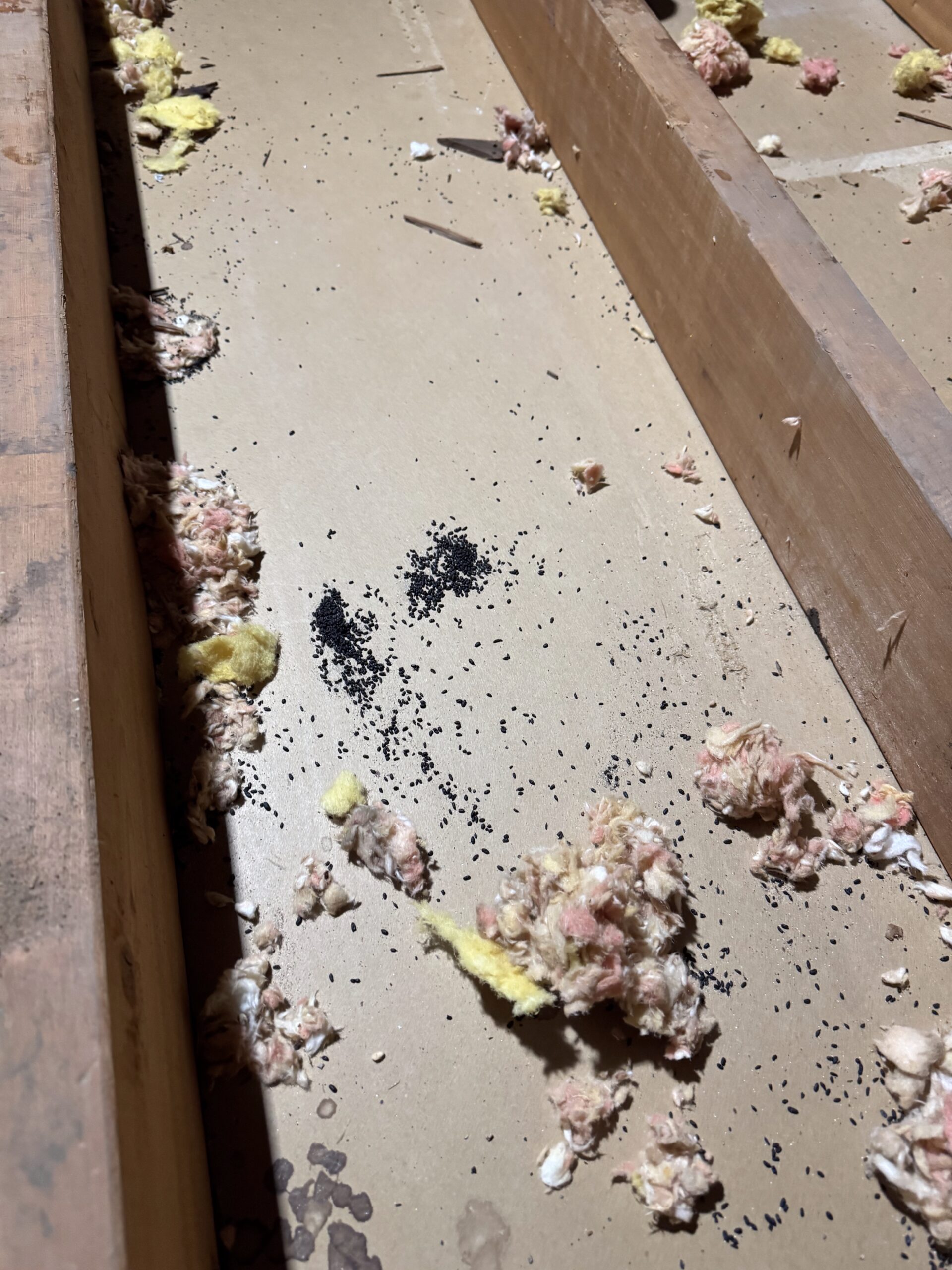
This is what we find inside homes just like yours
These aren’t stock photos. These are real images from rodent inspections and attic restorations we’ve performed across the Kansas City metro.
How to know if rodents are living in your home
Mice and rats are nocturnal and hide inside walls, attics, and crawl spaces. You may never see the animal — but the signs they leave are unmistakable.
Scratching or scurrying sounds
Scratching, tapping, or rapid scurrying inside walls, ceilings, or under floors — especially at night. Mice sounds are light and fast. Rat sounds are heavier and slower. If you hear consistent scratching in the same area at the same time each night, rodents have established a travel route through your wall cavities.
Droppings
Small, dark, pellet-shaped droppings — rice-sized for mice, larger for rats. Found along baseboards, inside cabinets, under sinks, in pantries, in attics, and in garages. Fresh droppings are dark and moist. Old droppings are gray and crumbly. Finding droppings in multiple locations means the population is established and active throughout your home.
Gnaw marks and chewed materials
Chewed food packaging, gnawed baseboards, shredded insulation, chewed cardboard, and damaged wiring. Rodents chew constantly because their teeth never stop growing. Fresh gnaw marks are light-colored; older ones darken over time. Finding chewed wiring behind walls or in your attic is a fire hazard that needs immediate attention.
Grease trails along walls
Rodents follow the same paths repeatedly, leaving dark grease marks (rub marks) along baseboards, wall edges, and around entry points. These marks come from body oils transferred as they squeeze through tight spaces. Grease trails are a definitive sign of an established population — they indicate habitual travel routes, not a one-time visitor.
Musty or ammonia odor
A persistent musty, stale, or ammonia-like smell — especially in enclosed spaces like cabinets, closets, attics, and basements. The odor comes from accumulated urine and droppings. In severe infestations, the smell permeates through walls and becomes noticeable in living spaces. The odor also attracts new rodents — your home is advertising vacancy.
A mouse or rat sighting
Seeing a mouse or rat — alive or dead — inside your home confirms an active infestation. Rodents are nocturnal and avoid open spaces. If you’re seeing one during the day or in common areas, the population is large enough that they’re being pushed into the open. One visible mouse typically means dozens more behind your walls.
Why store-bought traps and DIY methods always fail
We get calls every week from homeowners who spent months trying to handle mice themselves. Here’s why it doesn’t work.
Traps without sealing = endless cycle
You catch a few mice with snap traps or glue boards. Two weeks later, new mice appear. You catch more. More appear. This cycle continues indefinitely because the entry points are still open. New mice smell the scent trails left by the old ones and follow them right inside. Without professional exclusion, trapping is a treadmill — you’re running but never arriving.
Store-bought products are consumer-grade
Hardware store traps, ultrasonic repellers, peppermint oil, dryer sheets — none of these work for established infestations. Ultrasonic devices have been debunked by every university pest study. Peppermint oil evaporates in hours. Consumer traps are poorly placed by homeowners who don’t understand rodent behavior. Professional-grade equipment and species-specific placement are what actually eliminate populations.
You can’t find all the entry points
Homeowners seal the obvious gap under the garage door and call it done. Meanwhile, mice are entering through pipe penetrations in the attic, gaps where the siding meets the foundation, deteriorated weatherstripping, AC line openings, and cracks you can’t see without removing insulation. A professional inspection finds 10-20 entry points in a typical KC-area home. You’ll find 2-3.
Rodent species in the Kansas City metro
Three rodent species commonly invade KC-area homes. Each has different behaviors, entry patterns, and health risks that affect our elimination approach.
House mice
Small, gray, 2-4 inches. The most common rodent in KC-area homes. House mice can fit through a gap the size of a dime — ¼ inch. They nest inside walls, attics, and behind appliances. A single female produces 5-10 litters per year with 5-6 pups each. They contaminate food, spread disease, and cause extensive damage to insulation and wiring. If you have one, you have many.
Norway rats
Large, brown, 7-10 inches plus tail. Powerful burrowers found in basements, crawl spaces, and around foundations. More common on the Missouri side of the metro and in older neighborhoods with deteriorating foundations. Norway rats are aggressive, destructive, and carry leptospirosis and other serious diseases. They chew through concrete, wood, and even soft metals. A rat infestation is more destructive and more dangerous than mice.
Deer mice
Small, brown with white underbelly, large eyes. Found in garages, attics, storage areas, and outbuildings. The primary carrier of hantavirus in the Midwest — a severe respiratory illness contracted by breathing air contaminated with deer mouse droppings. More common in homes near open fields, parks, and rural edges of the metro — Gardner, Spring Hill, Edgerton, and the western edges of Olathe and Shawnee.
Why KC-area homes are high-risk for rodent infestations
The Kansas City metro’s geography, climate, and construction patterns create conditions that drive rodents into homes year-round.
Creek corridors are rodent highways
Indian Creek, Mill Creek, Cedar Creek, Turkey Creek, and the Kansas and Missouri Rivers create dense vegetation corridors where rodent populations thrive. Homes within a few blocks of any waterway in the KC metro face elevated rodent pressure year-round. Overland Park, Olathe, Lenexa, and Shawnee all have creek systems running directly through residential neighborhoods.
Fall migration drives them inside
When temperatures drop below 50°F in October and November, outdoor rodent populations migrate toward the warmth of your home. This annual migration is the most common trigger for new infestations. Homes without sealed entry points receive new rodent populations every fall — guaranteed. The KC metro’s sharp temperature swings between seasons make this migration pattern especially pronounced.
New construction displaces populations
The KC metro’s continued growth — especially in Johnson County, Lee’s Summit, and Blue Springs — disturbs existing rodent populations in the soil and vegetation. Displaced rodents seek the nearest available shelter. New homes built on recently graded land are at immediate risk, and neighboring existing homes absorb displaced populations from construction sites.
The price of waiting — in real dollars
Rodent populations don’t plateau. They grow exponentially. Every week you wait, the damage, contamination, and elimination cost increases.
Small population, few entry points, minimal contamination. Trapping + sealing + basic cleanup. Most affordable outcome.
Growing population, multiple nesting sites, droppings accumulating in walls and attic, chewed wiring beginning. Extended trapping + full exclusion + contamination assessment. Cost has doubled.
Large population, heavy contamination, insulation damage, strong odor, possible wiring damage. Full elimination + exclusion + partial attic restoration. Cost has tripled or more.
Massive population, severe insulation destruction, extensive wiring damage (fire hazard), urine-saturated materials, structural contamination. Full elimination + exclusion + complete attic restoration + possible electrical inspection. The most expensive outcome — and it was entirely preventable.
The estimate is free. The consultation is free. The only thing that costs money is waiting.
Dear Kansas City Homeowner,
“The seal-up is everything. Without it, you’re paying to trap mice that get replaced in two weeks.“
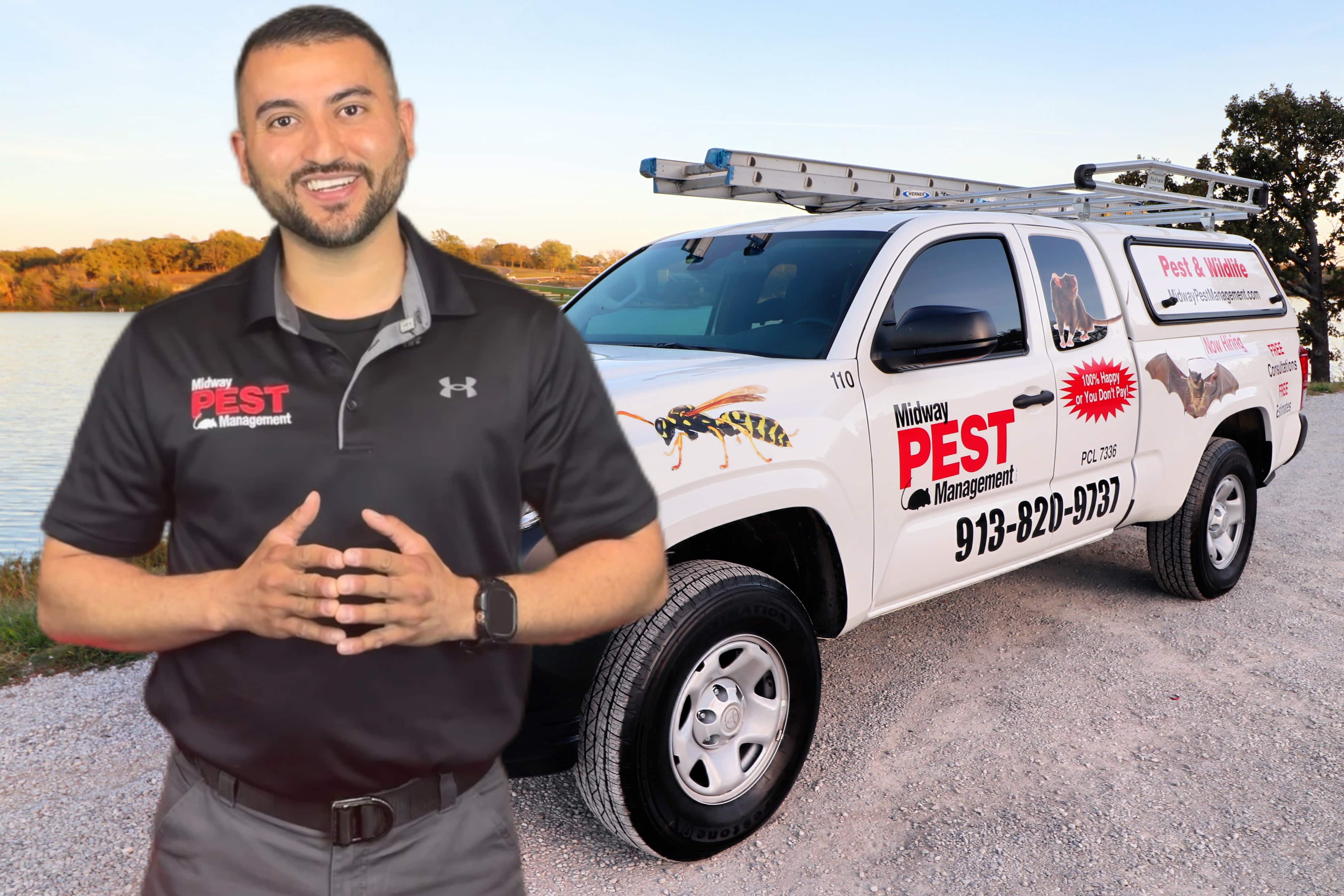
My name is Luis Gonzalez. I own Midway Pest Management. Rodent calls are our most common service — and the one where I see homeowners waste the most money before calling us. They’ve tried snap traps, glue boards, peppermint oil, ultrasonic devices, and three other pest companies. They’ve caught dozens of mice. And yet more keep appearing.
The reason is always the same: nobody sealed the entry points. Trapping without sealing is like bailing water without plugging the hole. It feels productive but it changes nothing. The mice you catch today are replaced by new mice following the same scent trails through the same open gaps within days.
Our process works because we do what most companies won’t — we get on our hands and knees and find every gap, crack, and opening in your home’s exterior. We seal them with materials rodents can’t chew through. Then we trap and eliminate the population that’s already inside. That’s why our results are permanent and theirs aren’t.
My commitment on every rodent job
Thorough inspection, professional trapping, permanent entry point sealing, exterior monitoring, and attic restoration when needed. If rodents re-enter through any entry point we sealed, we come back at no charge. The seal-up is what makes it permanent — and we stand behind every one.
If you’re tired of catching mice that keep coming back — call us. We’ll fix it for good.
Real results from real KC homeowners
“Roberto was able to find the source of our mouse issue within 30 minutes — one that had evaded several other companies for over a decade! Prompt, efficient and professional!”
“We had Luis out for an inspection due to mice concerns. Thorough, knowledgeable, no pressure. Looking forward to working with Midway.”
“Luis was fantastic. Knowledgeable, professional, and took the time to explain everything clearly. Highly recommend.”
“On-time service, very knowledgeable technician. Process explained thoroughly, all questions answered completely.”
“The service we received from Midway was truly outstanding! They were efficient and kept a close eye on our situation.”
“I was so impressed with Roberto’s knowledge. I feel very confident that he will get this issue taken care of.”
Rodent control FAQ
Thorough answers to every question Kansas City homeowners ask about mice and rats.
How do I know if I have mice or rats?
Common signs: scratching sounds in walls or ceilings (especially at night), droppings along baseboards or in cabinets, gnaw marks on food packaging or baseboards, grease trails along walls, musty or ammonia odor, or sighting the animal. If you notice any of these, call us for a free consultation — we’ll tell you exactly what you have and how large the population is.
What is a rodent seal-up and why is it the most important step?
Seal-up means closing every gap, crack, and opening in your home’s exterior that rodents use to enter. Without it, new mice follow the scent trails left by old ones and enter through the same gaps within weeks of trapping. Seal-up is what makes results permanent. It’s the step most companies skip — and it’s the reason their customers keep calling back.
Is rodent control safe for kids and pets?
Yes. We use tamper-resistant traps placed in locations inaccessible to children and pets. Exterior bait stations are locked and secured. We never use loose poison inside your home. Every method is designed with family and pet safety as a priority.
How long does it take to eliminate an infestation?
Most infestations are resolved within 1-3 weeks depending on population size and activity level. The elimination timeline includes trapping, monitoring, and seal-up. Severe or long-term infestations may take longer for complete population elimination and cleanup.
Why didn’t my DIY traps work?
Three reasons: wrong placement (rodents travel along walls, not through open space), wrong trap type (consumer-grade products are less effective), and no exclusion (new mice replace the ones you catch through open entry points). Professional trapping based on species behavior and activity patterns, combined with permanent sealing, is what actually eliminates infestations.
Do you offer ongoing protection?
Yes. We offer exterior bait station monitoring programs that intercept rodent activity before it reaches your home. Our Premium quarterly pest control plan also includes rodent population control with quarterly inspection and maintenance of exterior stations.
When does attic restoration become necessary?
When insulation is heavily contaminated with droppings, urine, and nesting material — to the point where it’s affecting air quality, creating odor, or has lost its thermal value. Our technicians assess contamination honestly and only recommend restoration when it’s genuinely needed. Not every rodent job requires it.
How much does rodent elimination cost?
Cost varies based on population size, number of entry points, home size, and whether attic restoration is needed. We provide a detailed estimate after inspection so you know exactly what to expect — no hidden fees, no surprise charges. The estimate and consultation are free. Call 913-820-9737.
Mice & rat control across Kansas City — city-specific expertise
Every city has different geography, construction, and rodent pressure. We’ve built dedicated guides for the cities we serve most.
Mice & rat control in Olathe
K-7 corridor development, Mill Creek & Cedar Creek corridors, farmland borders. Our home base — fastest response.
Mice & rat control in Overland Park
Indian Creek corridor, mature landscaping, garage-to-house migration, mid-century ranch vulnerabilities.
Mice & rat control in Lenexa
Shawnee Mission Park border, K-10 corridor development, 1,600 acres of wildlife habitat next door.
Mice & rat control in Shawnee
Turkey Creek watershed, Kansas River floodplain, western expansion — three-way rodent pressure.
Mice & rat control in Lee’s Summit
Longview Lake, Little Blue River, walkout basements, Norway rats. Missouri-side expertise.
Rodent problems often lead to these
Rodent infestations create secondary problems that we also handle completely.
Attic restoration
Heavy contamination requires complete insulation removal, DSV™ sanitization, Bac-Azap® deodorization, and TAP® insulation replacement.
Quarterly pest control
Our Premium plan includes exterior rodent bait stations with quarterly inspection — ongoing protection after elimination.
Nuisance wildlife
Rodent entry points often allow other wildlife in too. Snakes follow mice inside. If rodents are getting in, others may be too.
Every day that population grows,
your damage bill increases and your family’s health risk rises.
Free estimate. Free consultation. Complete elimination. Permanent sealing. From a local, owner-operated team that does rodent work the right way. The only cost is waiting.